Rainbow Landscape Embroidery Design
A Calm, Colorful Anchor for Thoughtful Stitching
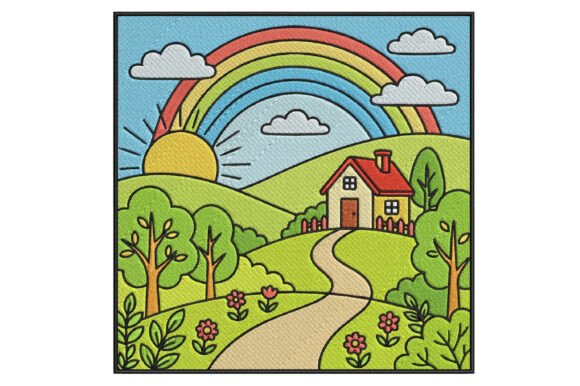
When I first opened the Rainbow Landscape Embroidery Design, I didn’t just see stitches—I felt the quiet hush of a nursery at golden hour. It’s not loud or busy; it’s a gentle, horizontal sweep of soft hills, a subtle arc of rainbow, and open sky. The composition breathes. That matters—especially if you’re stitching for baby items, boutique tea towels, or minimalist sweatshirts where visual clutter undermines handmade charm. This isn’t a design that shouts. It invites pause. And in today’s oversaturated craft market, that kind of intentionality is a quiet competitive edge.
Where It Shines (and Where It Asks for Care)
I tested the Rainbow Landscape Embroidery Design on three real projects: a linen baby pillow cover, a medium-weight organic cotton tote bag, and a brushed cotton unisex sweatshirt. On the pillow cover? Perfect. The gentle curves translated cleanly, the rainbow bands held saturation without bleeding, and the overall scale felt intentional—not oversized, not shrinking into insignificance. Customers browsing a handmade nursery shop would recognize warmth and care in that stitch.
On the tote bag, it worked beautifully centered above the side seam—spacious enough to read as art, not decoration. But here’s what I noticed: the lower hillline uses fine satin stitch transitions. On loosely woven canvas or thin cotton twill, those edges softened slightly without proper cutaway stabilizer. Not a flaw—just a cue. This design rewards attention to fabric texture and stabilizer choice. It’s not forgiving on flimsy blanks, but it’s exceptionally generous on stable, medium-weight substrates.
The sweatshirt test revealed its sweet spot—and its boundary. On the flat chest area? Clear, balanced, joyful. On the curved shoulder seam? A slight pull distorted the rainbow’s top curve. So yes—it’s ideal for custom apparel, but best placed on flat zones: center chest, back yoke, or lower hem of a onesie. Avoid caps or curved pockets unless you’re using advanced hooping techniques or digitizing adjustments.
Real-World Fit for Your Craft Business
If you’re an Etsy seller or small shop owner building a cohesive nursery line, this design bridges function and feeling. It reads as both decorative and meaningful—a subtle nod to growth, calm, and color without leaning into cliché. Pair it with neutral-toned baby blankets or oatmeal-colored aprons, and it elevates your handmade product from “cute” to “curated.” Buyers notice that difference. They pay more for it. They tag your shop in gift posts. That’s brand consistency built stitch by stitch.
As a digital embroidery file, it also holds up in mockups. I dropped it into light and dark fabric previews—no surprises. The rainbow maintains legibility against charcoal fleece or ivory linen. That’s rare. Many landscape motifs drown in low contrast or get lost in thread shimmer. This one balances fill stitch density and negative space so the eye lands where it should: on the arc, not the background.
What to Check Before You Stitch (or Sell)
- Test on scrap first—especially if using textured fabric like terry cloth or bouclé. Those soft hills can blur if stabilizer isn’t matched to loft.
- Review stitch density—it’s moderate, not heavy, which helps with drape on baby clothes—but confirm it’s appropriate for your end use. A high-density version would overwhelm a muslin swaddle.
- Confirm hoop size—the design spreads horizontally. If you’re working with a 4x4 hoop, check whether it fits comfortably without trimming key elements. Some versions may require 5x7.
- Inspect small details—the cloud shapes are minimal but expressive. On dark fabric, ensure your white or pale thread has enough contrast. A single off-tone thread can mute the whole mood.
- Try black-and-white mockups—this design relies on shape and rhythm as much as color. If it reads clearly in grayscale, you’ve got strong design bones.
- Verify licensing—if you plan to sell finished items (like embroidered pillow covers) or resell the embroidery file as part of a bundle, double-check usage rights. Not all machine embroidery design licenses permit commercial redistribution.
Why It Works Beyond the Hoop
This isn’t just another applique design or filler motif. The Rainbow Landscape Embroidery Design carries emotional resonance without sentimentality. That makes it unusually versatile: a holiday embroidery piece for spring baby showers, a personalized gift stitched onto a sibling’s backpack, or a signature element for a boutique’s limited-run tea towel collection. Its restraint gives it longevity—unlike trend-driven motifs, it won’t feel dated next season.
For apparel decorators, it offers a refreshing alternative to lettering or clipart-style icons. For craft fair sellers, it stands out on a crowded table because it feels *designed*, not assembled. And for hobbyists stitching for joy? It delivers satisfaction—not frustration. The satin stitch arcs flow, the fill areas breathe, and there’s no tiny lettering or fussy detail begging for re-hooping.
A Final Note on Trust and Tone
In my 12 years reviewing embroidery assets for makers, I’ve learned that the most trusted designs don’t wow with complexity—they earn trust through clarity, cohesion, and quiet confidence. The Rainbow Landscape Embroidery Design does exactly that. It doesn’t try to be everything. It knows its lane: peaceful, colorful, grounded, and gently expansive. Use it where calm meets craft—nursery decor, mindful apparel, thoughtful gifts—and let the stitching speak for itself.