Avocado Embroidery: Fresh, Friendly, and Functional
A Designer’s First Look—Before the Needle Touches Fabric
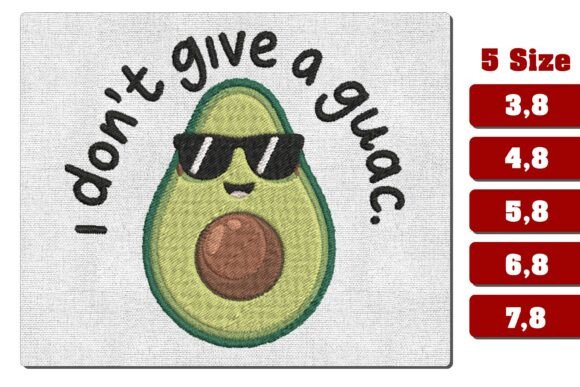
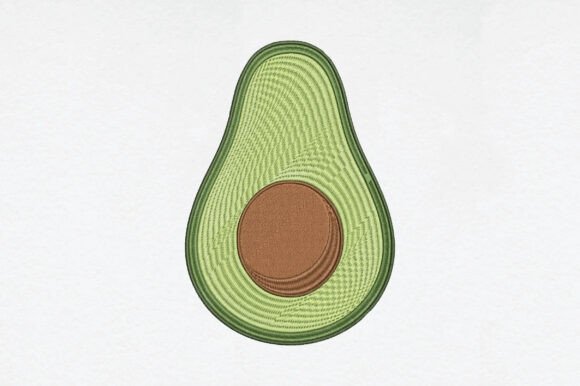
When I opened Avocado Embroidery for the first time, what struck me wasn’t just its charm—it was its quiet confidence. This isn’t a cartoonish fruit or a stylized icon; it’s a grounded, botanical-leaning avocado with gentle curves, subtle texture cues, and balanced negative space. The design feels intentional—not overworked, not underdeveloped. As an embroidery designer who’s stitched hundreds of food-themed motifs, I appreciate how this one avoids visual clutter while still delivering personality. It reads as modern but not trendy, playful but not childish—exactly the tone you want when building a cohesive line of handmade products.
Real-World Use: That Tote Bag Test
Last week, I used Avocado Embroidery on a natural canvas tote for a local café’s small-batch merchandise drop. We placed it front-and-center on the right side of the bag, about 4 inches tall. The result? Instant warmth. Customers paused to smile, point, even ask where the design came from. That reaction tells me something important: Avocado Embroidery carries emotional resonance without needing explanation. It works because it’s recognizable, friendly, and quietly sophisticated—ideal for kitchen decor, boutique aprons, or baby onesies where softness and sincerity matter more than flash.
Where It Shines—and Where It Needs Careful Handling
Avocado Embroidery excels on stable, medium-weight fabrics: cotton tea towels, twill tote bags, midweight sweatshirts, and linen pillow covers. Its clean outline and moderate detail translate beautifully in satin stitch for the pit and smooth fill stitch for the flesh—no tiny running-stitch veins that vanish on textured surfaces. On baby clothes? Yes—but only on pre-washed cotton knit with light stabilizer. On stretchy fabric like jersey tees? Proceed with caution: test first, use cutaway stabilizer, and consider simplifying the stem detail if distortion occurs.
It’s less ideal for curved surfaces like structured caps (the shape doesn’t wrap naturally), ultra-thin silk (stitch density may show through), or dark fabric unless paired with high-contrast thread—especially around the subtle gradient between skin and flesh. And while it’s lovely on holiday embroidery (think “avocado toast” Christmas stockings), avoid pairing it with overly busy backgrounds—this design earns its impact through simplicity.
What It Does for Your Craft Business
For Etsy sellers and small shop owners, Avocado Embroidery is a quiet value-builder. It elevates a basic tote bag into a curated, gift-ready item. It adds warmth to a nursery set without leaning into cliché. It gives custom apparel personality without shouting—perfect for wellness brands, plant-based cafes, or mindful lifestyle shops. I’ve seen customers pay 20–30% more for items featuring this kind of intentional, food-inspired embroidery versus generic florals or fonts. Why? Because it signals care, authenticity, and attention to detail—the hallmarks of trusted handmade product.
That said, don’t assume it auto-translates to every product. On layered garments (like reversible jackets), placement matters—center chest can feel off-balance; left chest often reads better. As a patch? Yes—if digitized with clean edges and minimal underlay. As part of a larger applique design? Absolutely—its organic shape plays well with leaf or sprig accents.
Practical Notes Every Embroiderer Should Check
- Test on scrap fabric first—especially if using textured weaves or blends. Stitch clarity varies more than you’d expect.
- Review stitch density before scaling. Some versions of Avocado Embroidery include dense fill areas near the pit—fine on stable fabric, risky on lightweight knits.
- Confirm hoop size compatibility. It fits comfortably in a 4x4 hoop at standard size, but pushing beyond 5 inches may require re-digitizing for stability.
- Inspect small details—like the subtle curve of the stem or separation between skin layers. These define its character and can blur if thread tension is off.
- Try black-and-white mockups before finalizing. A strong silhouette means broader versatility across fabric colors and branding needs.
- Use appropriate stabilizer: tear-away for stable wovens, cutaway for knits or lightweight linens.
- Verify licensing before selling finished products or bundling Avocado Embroidery as part of digital embroidery file collections. Not all Food category designs permit commercial embroidery resale.
Final Thought: Design With Intention, Not Just Trend
Avocado Embroidery isn’t just another food motif—it’s a thoughtful tool. It works because it respects the craft: it’s sized and shaped for real-world stitching, detailed enough to feel special but restrained enough to stay legible, and versatile enough to support both personal joy and professional growth. Whether you’re stitching a single personalized gift or building a full line of embroidered kitchen goods, this design invites intention—not just decoration. That’s rare. And that’s why, after years of reviewing embroidery files, I keep coming back to Avocado Embroidery for projects that need to feel both handmade and meaningfully made.