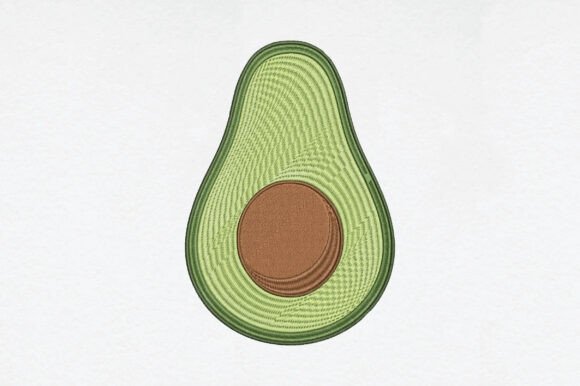
I Don’t Give a Guac Avocado Embroidery
First Impressions: Playful, Punchy, and Perfectly on Brand
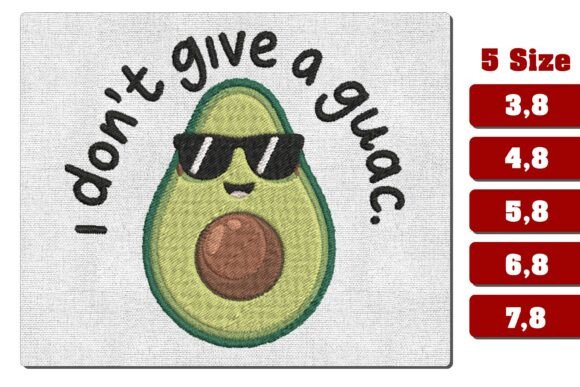
As someone who’s stitched hundreds of food-themed embroidery files—from delicate cherry blossoms to bold taco silhouettes—I opened I Don’t Give a Guac Avocado Embroidery expecting cheeky charm. What I got was something sharper: a confident, slightly irreverent visual that lands like a well-timed pun at a picnic. The avocado shape is rounded but not overly soft; the “guac” text curves with just enough swagger to feel hand-drawn, not stock. It’s not cartoonish, nor is it minimalist—it sits in that sweet spot where personality meets precision. For a machine embroidery design rooted in the Food category, it avoids cliché while still reading instantly as avocado + attitude.
A Real-World Test: Stitching It on a Linen-Cotton Tote Bag
Last week, I prepped a batch of custom tote bags for a local café pop-up—linen-cotton blend, medium weight, natural off-white. I chose the 5.8 in size of I Don’t Give a Guac Avocado Embroidery for center-front placement. Why that size? It filled the hoop comfortably without crowding the bag’s gusset, gave breathing room around the stem and leaf details, and kept the lettering legible from arm’s length. The satin stitch on the avocado outline held crisp edges, and the fill stitch inside had even density—not too sparse (which would show fabric), not so dense it puckered the weave. On this fabric, it looked handmade but polished—exactly what small shop owners need when branding reusable merch.
Where It Shines—and Where It Needs Thought
I Don’t Give a Guac Avocado Embroidery works beautifully on:
- Custom apparel: Sweatshirt fronts, relaxed-fit tees, and denim jackets—especially at 4.8 in or 5.8 in. The shape anchors well on chest placements.
- Embroidered patch projects: At 3.8 in, it cleans up nicely on twill backing, ready for iron-on or sew-on use on caps or backpacks.
- Baby embroidery and nursery decor: On organic cotton onesies or pillow covers, the 4.8 in size reads sweet, not sassy—tone shifts subtly with context and thread choice.
- Holiday embroidery and personalized gifts: Think avocado-shaped ornaments, kitchen towels for Cinco de Mayo, or bridal shower aprons. Its humor lands warmly, not sarcastically.
But be thoughtful with:
- Thin or stretchy fabric: On lightweight jersey or baby rib knits, use cutaway stabilizer underneath and consider sizing down to 4.8 in or less—the curves and tight corners in the lettering need support.
- Dark fabric: The design relies on contrast. Test thread colors first—kelly green for the avocado, creamy beige for “guac,” and charcoal gray for outlines often read cleaner than black on navy or charcoal.
- Curved surfaces like caps: The 3.8 in version fits best in standard front cap hoops. Larger sizes risk distortion unless you’re using a specialized cap frame.
- Frequent-wash items: Like tea towels or baby bibs—opt for high-quality polyester thread and confirm stitch density isn’t overly aggressive in the fill areas.
What It Adds to Your Finished Product—Beyond the Stitch
This isn’t just a fun graphic—it’s a subtle trust-builder. Customers recognize authenticity in embroidery that feels intentional, not slapped on. When I Don’t Give a Guac Avocado Embroidery is stitched cleanly, it signals care: proper hooping, smart stabilizer choice, attention to thread tension. That elevates your handmade product from “cute” to “curated.” For an Etsy seller, that distinction drives repeat orders. For a boutique owner, it strengthens brand consistency across merchandise lines. And for gift buyers? It adds instant recognition and shareability—people smile, snap photos, tag friends. That kind of engagement doesn’t come from generic clip art; it comes from a digital embroidery file with voice and viability.
Practical Designer Notes You’ll Actually Use
Before stitching I Don’t Give a Guac Avocado Embroidery on your next project, do these five things:
- Test on scrap fabric—same type and weight as your final piece. Watch how the leaf curl and “g” curve hold up.
- Check thread color contrast in natural light. A pale avocado green can disappear on ecru linen if your thread is too close in value.
- Review stitch density in your embroidery software. If fill areas look overly solid or thin, adjust underlay or reduce density slightly—especially for textured fabrics.
- Confirm hoop size for your chosen dimension. The 7.8 in version needs a large-format hoop; don’t assume it’ll fit your standard 5×7.
- Verify licensing before selling finished items or bundling the embroidery file into digital product kits. Some sellers allow commercial use; others restrict resale—check the original terms.
Also worth noting: This design leans more on satin and fill stitches than running stitch or applique design techniques. That means it’s efficient to stitch but benefits from clean digitizing—so inspect the file for stray jump stitches or unconnected elements before loading.
The Bottom Line for Craft Business Owners
I Don’t Give a Guac Avocado Embroidery isn’t just another food-themed embroidery project. It’s a versatile, audience-aware asset—one that balances wit with wearability. It fits seamlessly into collections for summer markets, café collabs, mom-and-pop grocers, or wellness brands leaning into playful nutrition. As a small shop product, it scales well: use the 3.8 in for charm bracelets or enamel pins (as a vector reference), the 6.8 in for wall hangings or oversized pillow covers. And because it’s rooted in universal food culture—not trend-dependent slang—it stays relevant beyond the current season.
If you’re building a library of reliable design assets, this one earns shelf space. Not because it’s flashy—but because it’s functional, expressive, and quietly professional. In other words: it gives great guac.