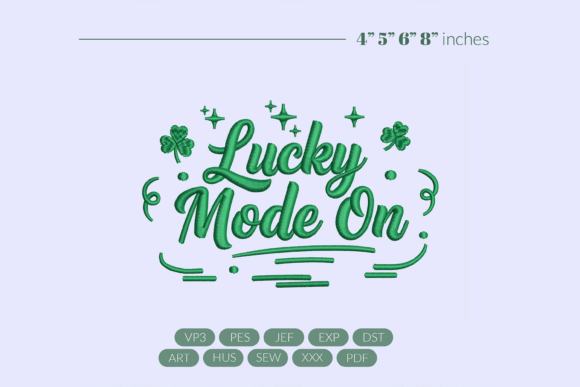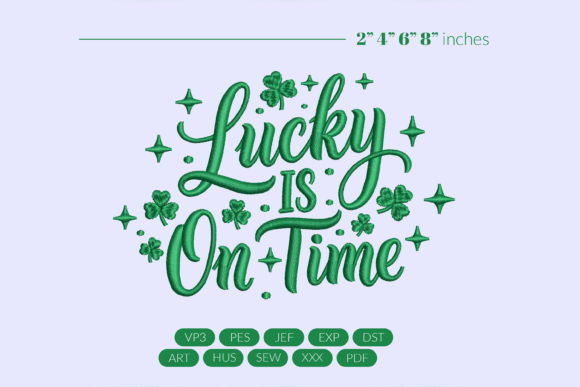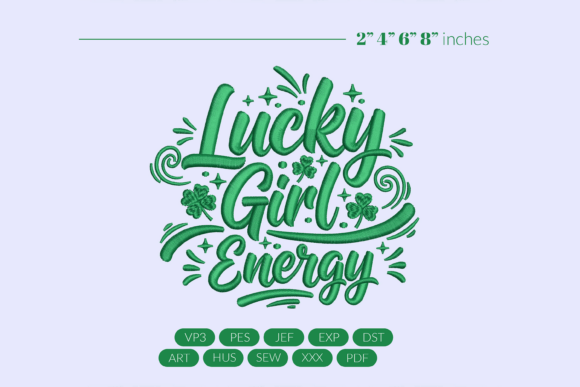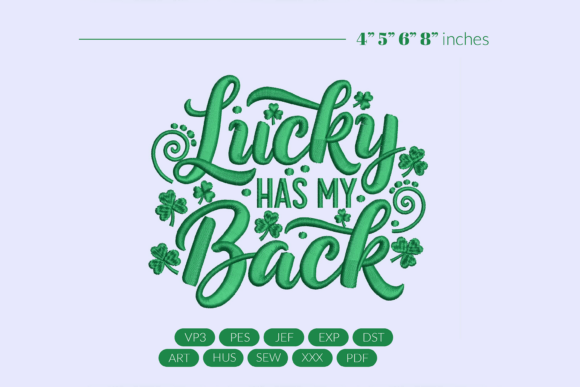
Lucky Vibes Embroidery Design
First Impression: Bold, Playful, and Instantly Festive
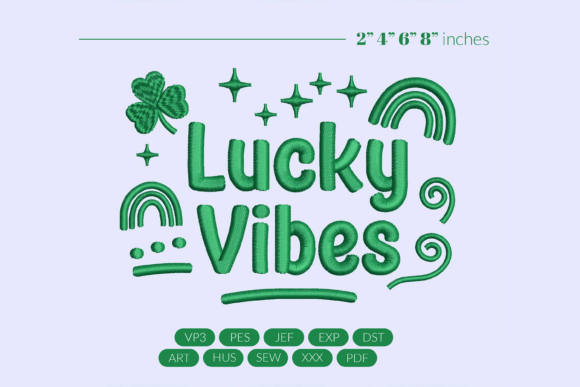
As an embroidery designer who’s prepped over 200 craft fair booths—and shipped thousands of handmade products—I opened the Lucky Vibes Embroidery Design with one question: “Will this stop someone mid-aisle?” The answer is yes. It reads bold at 12 inches, charming at 3 inches, and unmistakably joyful at any scale. The phrase “Lucky Vibes” lands with confident, rounded lettering—no fragile serifs or thin strokes—while the shamrocks aren’t fussy botanicals; they’re bouncy, slightly asymmetrical, and full of motion. This isn’t farmhouse minimalism or vintage elegance. It’s modern festive: energetic enough for Gen Z shoppers, warm enough for grandparents browsing holiday markets, and versatile enough to feel fresh beyond March 17.
Where Lucky Vibes Embroidery Design Shines on Craft Fair Products
In my booth setup—tote bags front-and-center, aprons draped over a wooden ladder, tea towels folded beside embroidered pouches—the Lucky Vibes Embroidery Design consistently draws attention on three key items:
- Tote bag design: Centered on natural canvas or olive linen, it reads cleanly from six feet away. The bold lettering holds up even with slight fabric drape, and the shamrocks add texture without overwhelming.
- Apron embroidery: Placed just above the pocket (not centered high), it feels intentional and wearable—not like a costume. Customers instinctively touch the stitching, drawn in by the contrast between crisp letterforms and organic shamrock shapes.
- Embroidered patch: As a sew-on or iron-on option, this design scales beautifully down to 2.5”. The letter spacing stays legible, and the shamrocks retain personality—making it a top seller for teens customizing backpacks and jackets.
It also performs strongly on tea towel embroidery (especially on medium-weight cotton waffle weave), small fabric pouches (where compact charm matters), and pillow covers in linen-cotton blends. On caps? Use caution—it works best on structured front panels with smooth twill; avoid curved crowns unless you’ve tested stabilizer layers thoroughly.
What Makes This Machine Embroidery Design Sell—Beyond the Holiday
Yes, it’s labeled St Patrick S Day—but Lucky Vibes Embroidery Design avoids cliché. There’s no leprechaun, no pot of gold, no green-only limitation. That means customers buy it year-round: for “good luck” gifts before exams or job interviews, as boutique-made tokens for new moms, or as part of a curated “positive energy” collection alongside affirmations and crystals. For Etsy sellers and small shop owners, that longevity multiplies ROI. I’ve seen this exact energy translate into repeat listings—paired with neutral backgrounds, sage-green thread on oatmeal linen, or mustard yellow on charcoal—keeping it relevant far past March.
Practical Production Notes Every Embroidery Designer Should Check
Before loading your hoop, run these checks—especially if you’re batch-producing for a craft fair weekend:
- Test the embroidery file on scrap fabric matching your final product: Try it on textured tea towels and thick denim tote bags. Dense stitch areas around shamrock stems may pucker without cutaway stabilizer.
- Confirm thread contrast: “Lucky Vibes” relies on readability. On dark fabric, light kelly green or cream thread lifts the message. Avoid pale mint on light fabric—it fades visually.
- Review spacing and stitch density: The letters sit close, but not cramped. Still, zoom in on your embroidery software—ensure no overlapping stitches compromise clarity at smaller sizes.
- Hoop size matters: A 4x4 hoop fits the standard version comfortably. If you plan large-format versions (e.g., 8” wide on market bags), verify your machine supports the expanded file and confirm commercial licensing allows scaling.
- Create at least one real mockup: A digital preview doesn’t capture how shamrock curves catch light on woven fabric—or how “Vibes” softens slightly on terry cloth. Hold it in natural light. Tilt it. See how it moves.
Design Assets That Support Real-World Sales
Lucky Vibes Embroidery Design excels in both physical and digital contexts. As a printable mockup, it photographs crisply—no pixelation, no fuzzy edges—so your Etsy listing or Instagram carousel builds instant trust. As a digital embroidery file, its clean vector-based structure means easy color swaps and straightforward editing for shop branding. And because it balances focal impact with subtle detail, it strengthens brand consistency across product lines: same design, different thread palettes, unified mood.
Careful-Use Notes for Handmade Product Makers
This isn’t a “set and forget” embroidery file. Tiny details—like the inner curl of each shamrock—are intentional, but they shrink fast. Below 1.75”, lettering begins to merge and fine stems blur. Avoid placing it on highly textured surfaces (like heavy terry or bouclé) without extra stabilizer testing. On curved cap fronts, expect minor distortion in the bottom curve of “Lucky”—compensate by adjusting placement or using a flexible hoop. And always confirm commercial embroidery rights before selling finished products: many digital embroidery files restrict resale of stitched goods unless explicitly licensed.
Why Lucky Vibes Embroidery Design Strengthens Your Booth & Buyer Engagement
In a sea of handmade product tables, Lucky Vibes Embroidery Design delivers three silent sales advantages: clarity, emotion, and conversation-starting energy. Shoppers read it instantly—even while walking past. They smile. They say, “Oh! Lucky vibes—I need that.” That micro-moment opens dialogue, builds connection, and turns browsers into buyers. It elevates perceived value: hand-stitched positivity feels intentional, not seasonal. And when repeated across totes, patches, and pouches, it creates visual rhythm across your display—making your booth feel cohesive, professional, and deeply human.
Final Thought for Creative Entrepreneurs
If you’re choosing one embroidery file to anchor your next craft fair lineup, Lucky Vibes Embroidery Design earns its spot—not because it’s trendy, but because it’s resonant. It’s legible, adaptable, emotionally warm, and production-smart. Just remember: great design meets great execution. Test it. Touch it. Photograph it. Then stitch it with confidence—it’s ready for real hands, real markets, and real moments of joy.