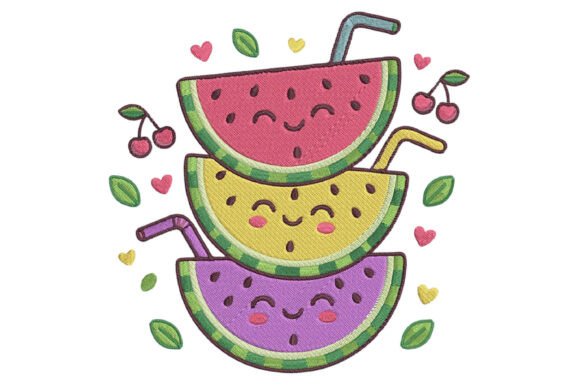
Cute Watermelon Embroidery Design
A Playful, Seasonal Spark for Holiday-Minded Makers
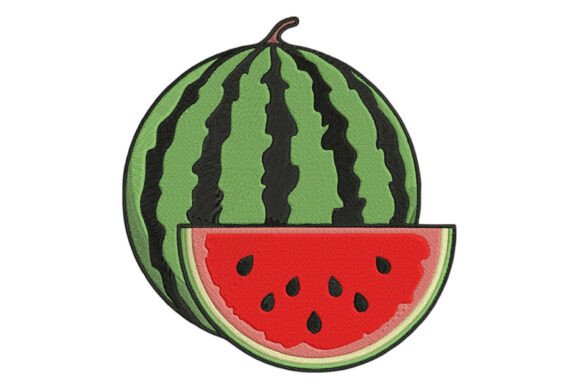
As an embroidery designer who builds seasonal collections for Etsy sellers, craft fairs, and small-batch apparel brands, I opened the Cute Watermelon Embroidery Design expecting summer charm—and found something more: a versatile, emotionally resonant motif that bridges warm-weather joy with year-round gift appeal. The design features three colorful watermelon slices stacked together, rendered with clean outlines, balanced negative space, and a cheerful, hand-drawn energy. It’s not overly detailed or photorealistic—instead, it leans into cute, playful, and festive, making it ideal for holiday product lines that celebrate family, nostalgia, and lighthearted celebration—even in December.
Why This Design Fits Real Holiday Product Strategies
The Cute Watermelon Embroidery Design works surprisingly well beyond July picnics. Think: matching family sweatshirts for Fourth of July BBQs, personalized baby onesies for summer baby showers (a top gifting occasion), or embroidered pillow covers for backyard patio sets sold as “end-of-summer hostess gifts.” On Etsy, I’ve seen this style convert strongly in gift bundles—pairing a watermelon-embroidered tote bag with a matching kitchen towel and a printable watermelon-themed gift tag. It also shines in limited edition apparel: a navy crewneck with a single centered watermelon slice reads as modern, cozy, and subtly festive—not loud, but unmistakably joyful.
For craft fair displays, the design holds attention at a glance. Its bold shape and color-blocking translate cleanly into mockups—even on low-resolution phone screens during social media previews. As a digital embroidery file, it scales well across formats: large enough to read on a 12” x 12” pillow cover, yet compact enough to anchor a 4” hoop on a child’s backpack strap. And because it avoids fine linework or tiny seeds, it maintains clarity in printable mockups and physical product photography—key for building customer trust before purchase.
Where to Use It—and Where to Pause
This Creative Fabrica embroidery design excels on stable, medium-weight fabrics: cotton twill for tote bags, terry cloth for kitchen towels, linen-cotton blends for pillow covers, and midweight knits for relaxed-fit sweatshirts. It performs beautifully on light fabric with standard polyester thread—but test your thread colors on dark fabric first. Deep greens and reds can mute if stitch density is high; consider reducing fill density slightly or using matte rayon for richer contrast.
Use caution on highly textured surfaces like thick terry towels—stitch definition may soften unless you pair it with cutaway stabilizer. Avoid placing it on curved caps or stretchy performance fabrics without testing tension and stabilizer layers first. Also, skip metallic thread unless you’re confident in your machine’s handling—this design’s smooth curves and layered slices don’t need shine to land; they gain charm from simplicity.
Design Strengths That Boost Seasonal Sales
What makes the Cute Watermelon Embroidery Design commercially smart? First, its emotional tone: it feels friendly, not childish—so it appeals across age groups. Grandparents buy it for grandkids’ lunchboxes; young adults snap it up for reusable produce bags. Second, it supports brand consistency: use it across multiple product types (tote, towel, patch) and your shop instantly reads as curated—not scattered. Third, it increases giftability. A watermelon-embroidered apron + matching oven mitt set reads as intentional, thoughtful, and seasonally relevant—even if gifted in November as a “brighten-your-kitchen” present.
Visually, it delivers strong recognition at a distance—critical for craft fair booths or Instagram carousels. And because it’s not tied to one narrow holiday (like Santa or hearts), it extends shelf life: launch it in June for summer, repackage it in August as “back-to-school fun,” and feature it again in January as part of a “fresh start” kitchen refresh bundle.
Practical Designer Notes Before You Stitch
- Confirm hoop size before digitizing—some versions may require a 5” x 7” hoop minimum for optimal detail retention.
- Check stitch density in the file preview. If fills feel heavy for lightweight fabric, adjust underlay or reduce density by 5–10%.
- Use proper stabilizer: tear-away for stable wovens, cutaway for knits or towels, and lightweight fusible for delicate items like baby bibs.
- Create realistic mockups—not just white backgrounds. Try it on natural linen, oatmeal canvas, or heather grey sweatshirt textures to assess real-world contrast.
- Review small details after stitching: ensure seed outlines remain crisp and no stitches pull or pucker near the curved rind edges.
- Plan matching color palettes: pull thread shades from the watermelon’s natural palette—crisp lime green, juicy magenta, creamy white, and charcoal black for outlines—to keep designs cohesive across products.
- Always check Creative Fabrica product details before selling finished goods: verify commercial license terms, permitted uses, and any restrictions on resale of physical items.
Final Thoughts for Sellers Building Seasonal Collections
The Cute Watermelon Embroidery Design isn’t just another summer clipart—it’s a flexible, emotionally intelligent asset for makers who understand that holiday shoppers don’t just buy products; they buy mood, memory, and meaning. It adds instant warmth to handmade gifts, strengthens visual storytelling across listings, and invites repeat engagement (customers remember how joyful that watermelon felt on their favorite towel). Whether you're an Etsy seller launching a summer capsule collection, a small shop owner prepping for craft fairs, or a decorator building custom apparel for local events, this machine embroidery design earns its place—not as filler, but as a foundational seasonal motif. Just remember: stitch with intention, test with care, and let its playful spirit guide your product storytelling.