Cool Shark Sunglasses Embroidery Design
First Impression: Playful, Polished, and Instantly Recognizable
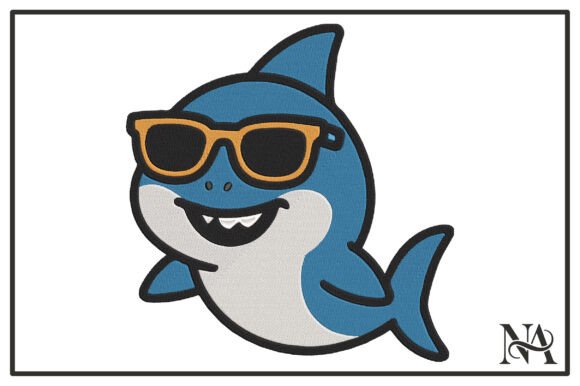
As an embroidery designer who’s digitized and stitched over 2,000 commercial designs for small businesses—from coastal cafés to pet boutiques—I opened the Cool Shark Sunglasses Embroidery Design file expecting fun. What I found was more: a tightly balanced, ocean-inspired machine embroidery design that lands squarely between whimsy and professionalism. The shark isn’t cartoonish or overly aggressive; it’s friendly, confident, and stylish—thanks to those clean-lined sunglasses. It reads as modern, not juvenile, and feels equally at home on a boutique tote bag or a staff apron. For Fish-category embroidery files, this stands out by avoiding cliché (no bubbles, no “ocean blue” dependency) while still delivering unmistakable thematic clarity.
Real-World Business Use: Where This Design Delivers Value
The Cool Shark Sunglasses Embroidery Design thrives in high-visibility, low-friction branding scenarios. Think of a local florist adding it as a chest patch on linen aprons—it adds personality without overwhelming their botanical aesthetic. Or a seaside bakery stitching it onto cotton canvas tote bags for weekend markets: the design scales well, holds its shape, and invites smiles without sacrificing legibility. As a cap embroidery motif, it works beautifully on structured front panels—especially when paired with minimal text like “Salt & Sprout” or “Fin & Flour.”
For embroidered patches, this design shines. Its bold silhouette and clear negative space translate cleanly into woven or chenille alternatives later—and even as a heat-transfer mockup for client approval. Small business merch teams appreciate how easily it integrates into existing design assets: it complements neutral palettes, pairs well with sans-serif typography, and doesn’t compete with logos on dual-branding projects (e.g., a surf shop x local coffee roaster collab). As an apron embroidery accent or sleeve detail on unisex work shirts, it reinforces brand identity without feeling corporate—keeping that handmade product warmth intact.
Where to Use It Thoughtfully (Not Just Everywhere)
Like any strong embroidery file, the Cool Shark Sunglasses Embroidery Design has sweet spots—and boundaries. Avoid pushing it below 2.5 inches wide on curved surfaces like baseball cap fronts unless you’ve verified stitch density and underlay behavior. High stitch density can cause puckering on lightweight knits or textured fabric like terry cloth—so test it first on your intended base material. Dark uniforms? Confirm thread color contrast: bright white or neon yellow thread pops best against navy or charcoal, but avoid pastels unless your brand palette intentionally leans soft.
Don’t assume it auto-scales for tiny applications. At under 1.75 inches, the sunglasses’ arms and eye detail may blur or collapse—so always generate a printable mockup and verify spacing at actual size. And remember: if you’re planning frequent washing (think café staff aprons or food truck uniforms), reinforce with tear-away + cut-away stabilizer combo and confirm the design avoids long satin-stitch runs that could snag.
Brand Identity Impact: More Than Just Cute
This isn’t just decoration—it’s a quiet trust signal. When customers see the Cool Shark Sunglasses Embroidery Design on a handmade product or custom apparel item, they register three things instantly: intentionality, approachability, and visual confidence. That matters for Etsy sellers building buyer engagement—consistent use across packaging accents, tote bag design, and thank-you cards creates cohesion that feels curated, not cluttered. For local businesses, it elevates perceived value: a $28 tote bag with this embroidered patch reads premium, not promotional. And because it’s rooted in universal playfulness—not niche humor—it builds recognition across age groups and demographics without alienating.
Practical Designer Notes Before You Stitch
Before launching into production, run these checks:
- Test in black and white first. This reveals balance issues—does the shark’s grin hold up without color cues? Does the sunglass reflection read as intentional or accidental?
- Verify small-patch viability. Resize to your most common patch dimension (e.g., 2" x 1.5") and inspect outlines and inner spacing in your embroidery software.
- Review thread colors critically. Default suggestions may lean beachy—but does “Coral Pink” actually contrast on your oatmeal twill? Swatch physically.
- Confirm hoop size compatibility. If your standard hoops are 4x4”, check whether the design fits comfortably—or if it nudges into 5x7” territory, which affects turnaround time and pricing.
- Always test on real fabric. A digital preview lies. Run a sample on your exact apron linen or cap twill before bulk hooping.
- Use appropriate stabilizer. Medium-weight cut-away prevents distortion on stretchy or unstable fabrics—especially critical for cap embroidery and tote bag design.
- Create a client-facing mockup. Embed the Cool Shark Sunglasses Embroidery Design into a realistic product photo before final sign-off.
- Compare beside other design assets. Does it harmonize with your logo’s weight and rhythm? Does it sit visually at the same “level” as your typography or icon system?
- Confirm commercial licensing. Since this is a digital embroidery file intended for small business merch and commercial embroidery, ensure your purchase grants rights for resale, branded patches, and customer-facing finished product.
The Cool Shark Sunglasses Embroidery Design isn’t just another Fish-themed embroidery file—it’s a versatile, audience-aware tool for building memorable brand moments. Whether you're a craft studio launching custom apparel or an embroidery shop sourcing reliable design assets for local clients, this machine embroidery design earns its place in your active library. Used intentionally, it turns functional items—aprons, caps, totes—into subtle brand ambassadors. And in today’s market, where authenticity and visual consistency drive buyer engagement, that’s not decorative. That’s strategic.