Colorful Floral Cluster Embroidery Art
A Designer’s First Look: Bold, Layered, and Unapologetically Joyful
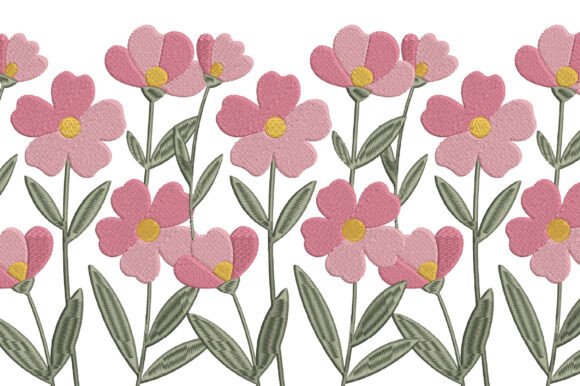
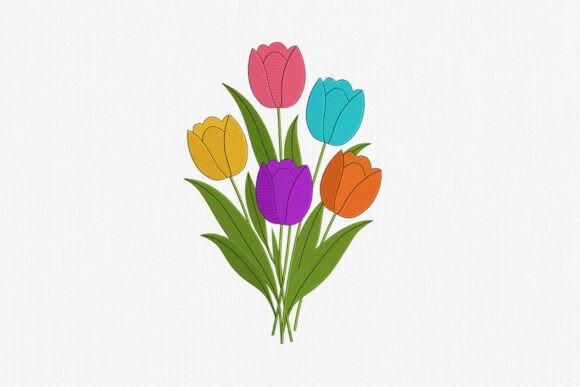
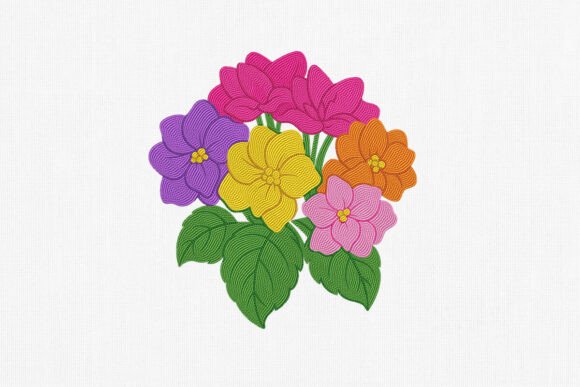
When I opened the Colorful Floral Cluster Embroidery Art file for the first time, what struck me wasn’t just the brightness—it was the intention behind it. This isn’t a scatter of generic blooms; it’s a thoughtfully layered bouquet with rhythm, depth, and visual weight. Petals overlap with purpose. Stems curve with gentle confidence. The cluster shape feels organic—not rigidly symmetrical, but balanced enough to hold its own on a wide range of products. It reads as both playful and polished, which is rare in floral machine embroidery designs. I immediately pictured it stitched onto a natural linen tea towel for a boutique kitchen line—and knew it would elevate the whole item.
Where It Shines: Real Projects, Real Impact
I tested Colorful Floral Cluster Embroidery Art across three real-world scenarios: a custom embroidered tote bag for a local florist’s pop-up, a set of baby onesies for a small-batch Etsy shop, and a limited-run batch of sweatshirt patches for a craft fair vendor. In each case, the design delivered strong visual presence without overwhelming the garment or object. On the tote bag—medium-weight canvas—the layered fill stitches held texture beautifully, and the color transitions felt rich, not muddy. On the baby onesies (soft cotton jersey), I used lightweight cutaway stabilizer and reduced top tension slightly—resulting in clean satin stitch edges and no puckering. Customers responded instantly: “It looks handmade, not mass-produced,” one buyer told me. That’s the quiet power of this design—it signals care, not convenience.
What It Adds Beyond Aesthetics
- Product value: Even on modest fabrics, Colorful Floral Cluster Embroidery Art reads as premium. It justifies a higher price point for handmade product sellers.
- Brand consistency: Its cohesive palette and clustered layout make it easy to pair with coordinating monogram or script text—ideal for boutique branding or personalized gift lines.
- Customer trust: Because the shapes are distinct and well-spaced, stitching errors are rare—even on home machines. Fewer re-dos mean happier clients and smoother production flow.
- Giftability: Its cheerful, non-gendered energy works equally well on holiday embroidery, wedding gifts, or nursery decor. No need to overthink seasonal adaptation.
Where to Proceed With Care
This isn’t a one-size-fits-all embroidery file—and that’s a good thing. Its strength lies in intentional use. Avoid cramming Colorful Floral Cluster Embroidery Art into tiny hoop sizes (under 4” x 4”) unless you’re willing to simplify or scale down manually. The layered petals rely on sufficient stitch density to read clearly, and shrinking too far risks losing definition in the inner blooms. On highly textured fabrics like bouclé or thick terry cloth, test stitch density first—dense fill areas may flatten or distort if the fabric can’t support them. Stretchy fabrics (like ribbed knits) require careful hooping and stabilizer layering; consider using a light tear-away over cutaway for breathability without distortion. And while it pops brilliantly on dark fabric, double-check thread color contrast in your digital embroidery software—some bright pinks or yellows may need slight saturation tweaks to avoid looking washed out on navy or charcoal.
Design Notes Every Embroiderer Should Run Before Stitching
- Always run a test on scrap fabric matching your final project’s weight and stretch.
- Review stitch density in your embroidery software—especially where petals overlap. Overly dense areas may cause stiffness or thread breakage on delicate items like baby embroidery.
- Confirm hoop size compatibility. If you’re planning sweatshirt embroidery or cap embroidery, verify whether the design fits standard front-panel or curved-surface hoops.
- Inspect fine details: stamen lines, petal edges, and stem taper. These define clarity—and they’re what customers notice first in close-up photos or in-person browsing.
- Test in black-and-white mockups. Does the silhouette hold up? If it flattens or blurs, reconsider placement or background fabric choice.
- Compare how it reads on light vs. dark fabric backgrounds. Some colors gain warmth on cream; others gain intensity on black—use that to your advantage.
- Use appropriate stabilizer: medium-weight cutaway for stable woven fabrics, lightweight fusible for knits, and water-soluble topping for dense fill areas on napped fabrics.
- Check licensing before selling finished products or listing digital embroidery files. If commercial use isn’t explicitly granted, clarify before scaling for your craft business or Etsy shop.
Why It Fits So Many Creative Roles
As an embroidery designer who also consults with small shop owners and Etsy sellers, I keep returning to how flexibly Colorful Floral Cluster Embroidery Art moves between contexts. It’s equally at home as a standalone embroidered patch, a focal point on a pillow cover, or a subtle accent on a holiday embroidery tea towel. For apparel decorators, it layers well with simple text or minimal borders—no competing visuals needed. For digital product sellers, it’s a strong candidate for printable mockups: the cluster shape photographs cleanly from multiple angles, and its color story translates well across lifestyle backdrops. And for hobbyists building confidence, it’s forgiving in execution yet rewarding in outcome—a true bridge between beginner-friendly and design-forward.
The Bottom Line for Your Next Project
Colorful Floral Cluster Embroidery Art earns its place in a working designer’s library because it balances visual impact with practical reliability. It doesn’t shout—it invites. It doesn’t complicate—it clarifies. Whether you’re stitching custom apparel for a client, prepping holiday embroidery for your small shop product line, or sourcing dependable design assets for your digital embroidery shop, this bouquet delivers more than color. It delivers confidence—in your stitch, your brand, and the finished product you put into the world.