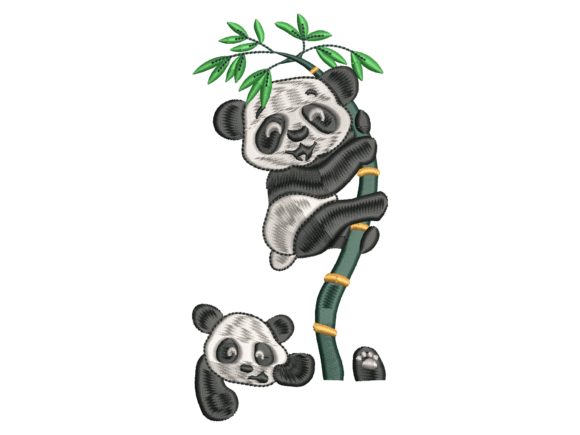
Climbing Panda Embroidery Design
First Impression: Playful, Whimsical, and Instantly Recognizable
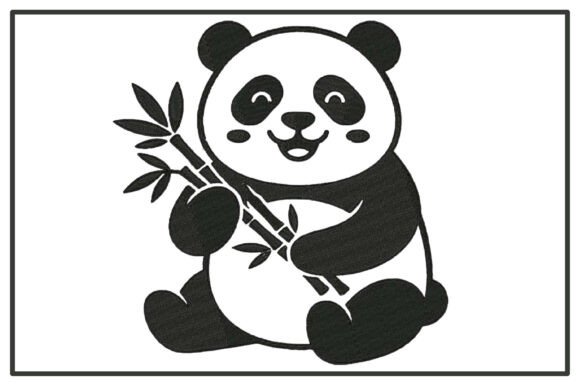
As an embroidery designer who’s prepped over 200 craft fair booths—and watched thousands of shoppers pause at a single stitch—I’ll say it straight: Climbing Panda Embroidery Design lands with cheerful, approachable charm. It’s not fussy or overly detailed—it’s boldly cute, with clear motion and gentle humor. That “climbing” action gives it energy, while the panda’s round face and soft silhouette keep it warm and baby-friendly. It reads as modern-farmhouse meets handmade boutique—neither too juvenile nor too minimalist. For Baby Animals category buyers, it hits that sweet spot between novelty and timeless appeal.
Where It Shines on Craft Fair Products
This design isn’t just versatile—it’s strategic. On a natural canvas tote bag? Perfect. The climbing pose flows with the drape, and the panda’s curved body echoes the bag’s shape. As an apron embroidery centered above the pocket? It adds personality without overwhelming function. On tea towel embroidery? It stands out crisply against linen or cotton weaves—especially when paired with subtle thread colors like charcoal grey and creamy off-white.
For embroidered patches, Climbing Panda Embroidery Design works beautifully at 3–4 inches wide—clean outlines hold up in wash-and-wear testing, and the minimal internal detail avoids puffing or fraying. On fabric pouches and small pillow covers (12" x 12" or smaller), it anchors the piece without shrinking the usable surface. And for caps? Yes—but only front-panel placement on structured, medium-crown caps. Avoid curved bill embroidery unless you’ve tested hoop clearance and stabilizer grip first.
What Makes It Sell at Market Stalls & Online
At a craft fair, attention is won in under three seconds. Climbing Panda Embroidery Design delivers that instant visual hook: friendly animal + dynamic pose = smile + pause + reach. It photographs exceptionally well for Etsy listings and printable mockups—no heavy shadows, no fine-line bleed, no color-muddying gradients. Its balanced proportions mean it scales cleanly from 2-inch accent (think corner of a market bag) to 6-inch focal point (centered on a pillow cover).
It also supports batch production. With moderate stitch density—not sparse, not overloaded—it runs reliably across mid-range commercial embroidery machines. No risky satin-stitch fills or micro-lettering to snag threads or demand rehooping. That consistency means you can produce 20 matching tote bags in a weekend without sacrificing quality or pace.
Real-World Production Notes You Can’t Skip
Before stitching your first Climbing Panda Embroidery Design sample, do this: test on scrap fabric matching your final product’s weight and texture. Bamboo-blend tea towels? Test. Heavy twill aprons? Test. Dark fabric? Confirm thread contrast—light greys and ivories often read better than stark white on navy or charcoal.
Watch for dense stitch areas around the panda’s paws and bamboo stem—they’re intentional but require proper stabilizer backing. Use cutaway for knits or stretchy fabrics; tear-away works well for stable cottons and linens. Always check spacing between limbs and stems—tight gaps can fill in or distort if tension isn’t calibrated. And confirm hoop size compatibility: most versions fit standard 4x4 hoops, but verify before bulk loading.
Crucially—review licensing. This is a digital embroidery file delivered in ZIP or RAR format. It’s a digital product, no physical item shipped, and no returns or refunds apply. If you plan commercial embroidery or resale of finished products, ensure the license permits it. Don’t assume.
Design Assets That Strengthen Your Brand
Climbing Panda Embroidery Design doesn’t just decorate—it elevates. When stitched cleanly on a hand-dyed cotton tote or a linen tea towel, it signals intentionality and care. Customers associate that polish with premium handmade quality, even at mid-tier price points. It pairs effortlessly with neutral palettes, letting your brand colors shine through fabric choice—not forced logo placement.
In booth displays, use it across 3–4 complementary items: a hanging pillow cover, folded tea towel stack, and open pouch beside a small framed patch sample. That repetition builds recognition without monotony. And because it feels both playful and refined, it bridges age groups—young parents love it for baby gear, grandparents buy it as giftable handmade product, and teens grab it for their backpacks.
Smart Pairings & What to Avoid
Pair it with: organic cotton, oatmeal linen, unbleached canvas, and soft chambray. Use matte cotton threads for texture harmony. Keep backgrounds simple—solid colors or tone-on-tone weaves let the panda pop.
Avoid: ultra-textured terry cloth (stitch definition blurs), heavily brushed fleece (piles swallow detail), and dark fabrics with low-contrast thread. Also skip sub-2-inch scaling—the bamboo leaves and facial features lose clarity fast. If you need a tiny version, ask the designer for a simplified variant—or redesign the core outline yourself before digitizing.
Final Designer Verdict
This isn’t just another animal motif. Climbing Panda Embroidery Design is a quiet workhorse—engaging enough to stop foot traffic, sturdy enough for daily use, and flexible enough to support your entire small shop product line. It strengthens booth cohesion, boosts Etsy listing click-throughs, and invites repeat customers who recognize your signature style. For craft fair sellers, embroidery business owners, and Etsy sellers building a recognizable handmade brand, it’s more than a machine embroidery design—it’s a reliable, joyful, and commercially smart design asset.
Your Next Step
Download the digital embroidery file, run one real mockup on your most common fabric, photograph it in natural light, and add it to your next craft fair lineup. Then watch how often someone points, smiles, and says, “Oh—I *need* that.”